Sunset Boulevard Media Follies
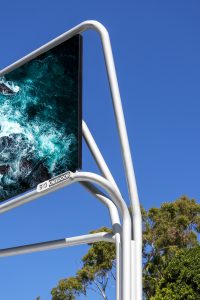
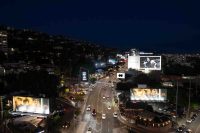
Location: West Hollywood, California Size: 50 x 20 ft Status: Built Program: Media Folly Client: Big Outdoor, Netflix
chevron_leftModern Take On Moderne
Sunset Boulevard has long served as a canvas for innovation. In the 1960s, hand-painted billboards defined the street. Today, digital displays continue that creative legacy.
The Media Follies reinterpret the traditional billboard as a digital art installation. Rather than relying on static formats, each project combines new technology with an unconventional structure. As a result, the displays become part of the urban landscape. Moreover, each Media Folly offers more than advertising. It also introduces public art to the Sunset Strip. Together, these installations enrich the boulevard’s vibrant culture.
Invisible Frame
A Billboard Without Borders
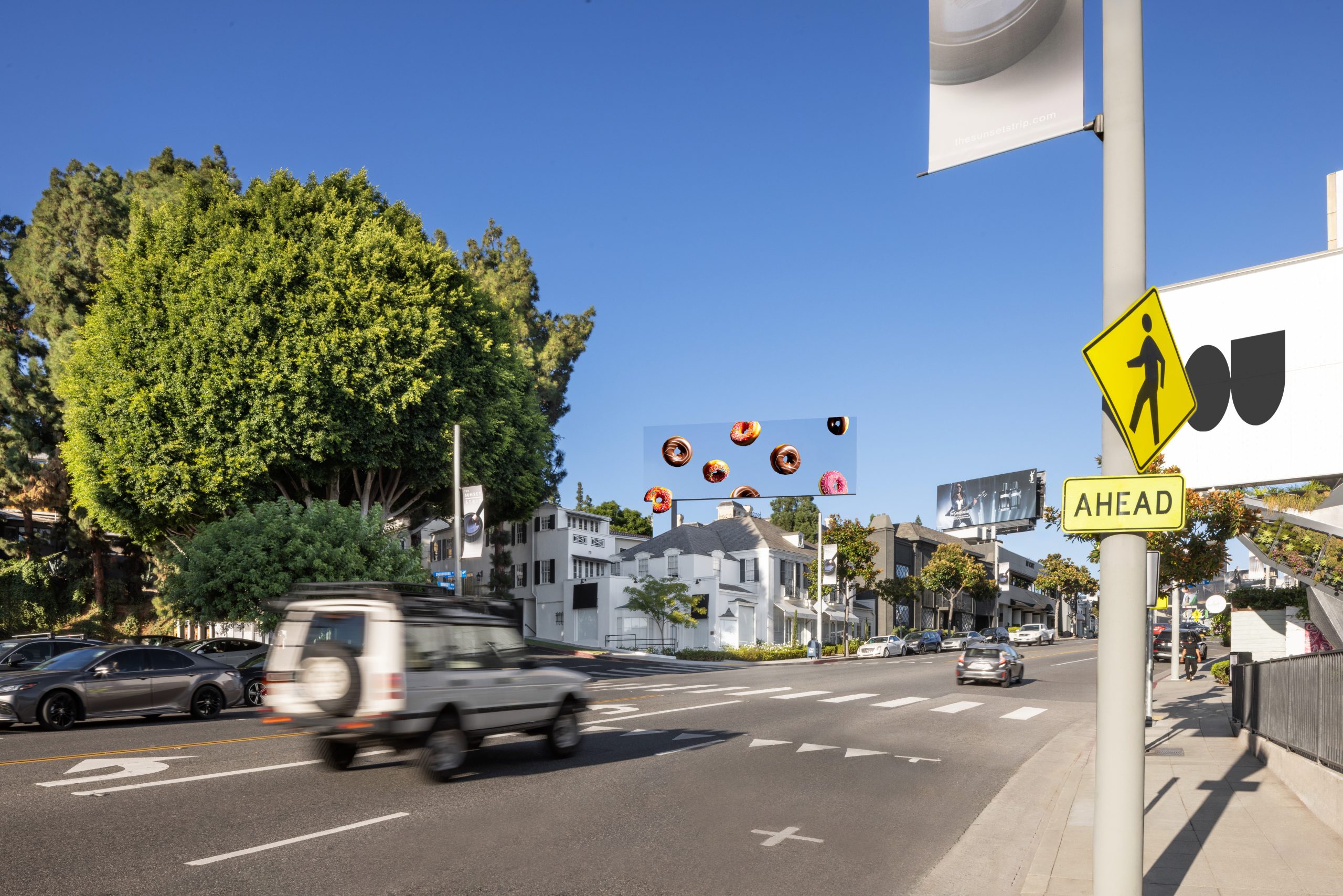
The Invisible Frame creates new opportunities for connection along Sunset Boulevard. As graphics and signage evolve, technology changes how people experience information. Therefore, the project moves beyond oversized and static imagery.
Instead, the design uses a streamlined structure to engage people passing by. The approach also creates a more integrated relationship between signage and the city.
The project draws inspiration from the 1930s Constance Bennett Building. In response, a floating billboard complements the historic architecture without overwhelming it.
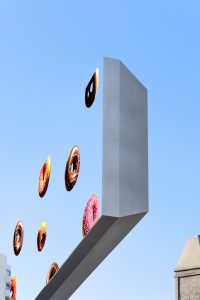
Reflective material conceals the structure around the digital display. Consequently, images appear to float freely in the sky. The design eliminates the need for a traditional frame or border.
Moreover, the billboard distinguishes new technology from historic architecture. In this way, it celebrates the evolving role of signage in West Hollywood.
A Canvas for Digital Art
In addition to advertising, the Invisible Frame supports public art initiatives. For example, it can host work through West Hollywood’s Moving Image Media Art Program, or MIMA.
The display gives local digital artists a prominent platform. Furthermore, it can feature seasonal programs, campaigns, and coordinated events along the boulevard.
Artists can use the technology to create floating subjects within the skyline. As a result, digital artwork interacts directly with the city and surrounding architecture.
Ultimately, the Invisible Frame respects history by giving it space. At the same time, it proposes a new way to experience information, art, and ideas.
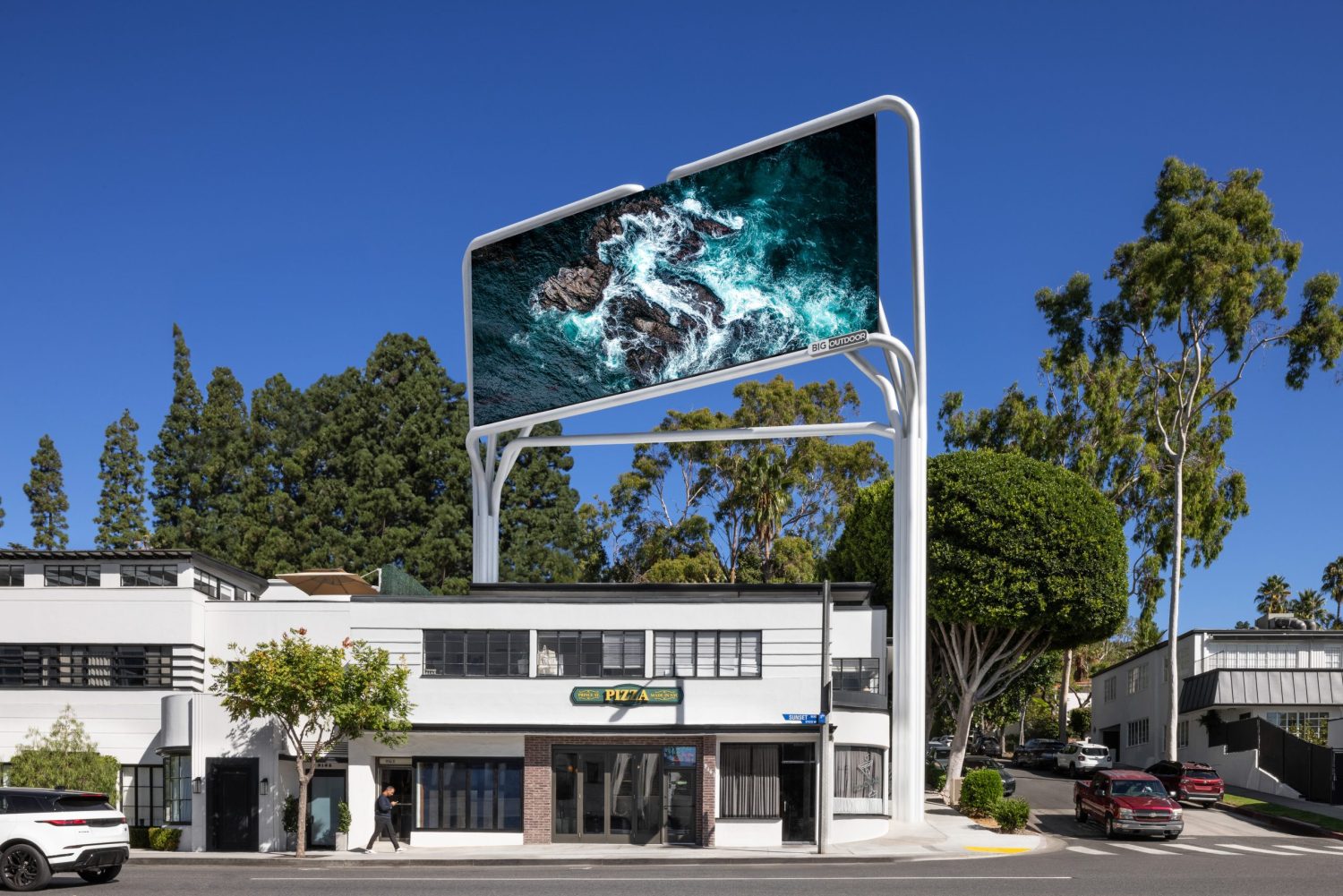
Streamlined Arbor
Old Architecture, New Technology
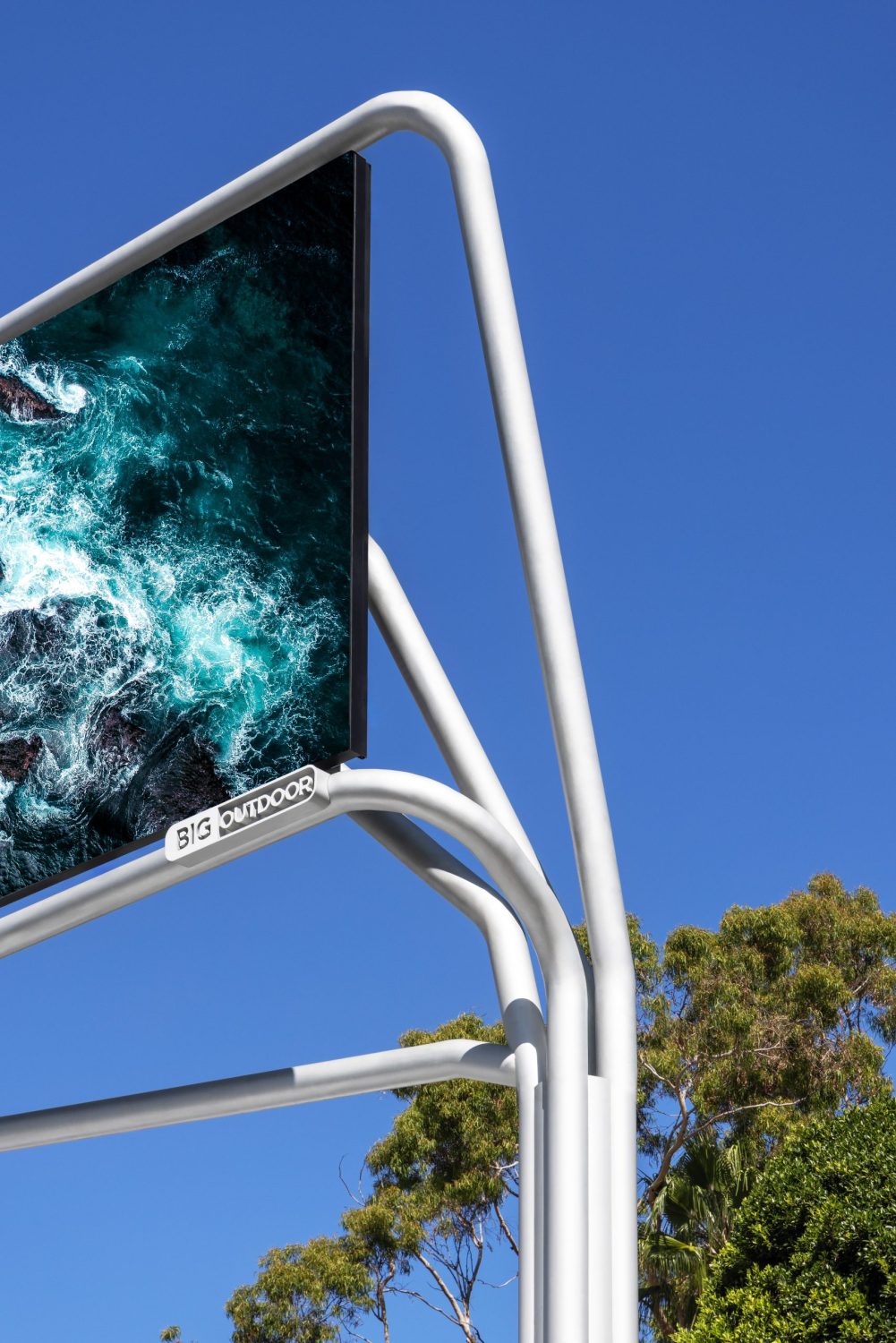
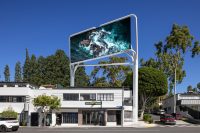
The sign at 9157 Sunset advances the boulevard’s reputation for creative billboards. First, the project preserves the historic character of the Sentney Building. Then, it replaces the static billboard with a digital display.
The new design also reconsiders the relationship between the sign and the building below. As a result, the billboard supports the architecture instead of competing with it.
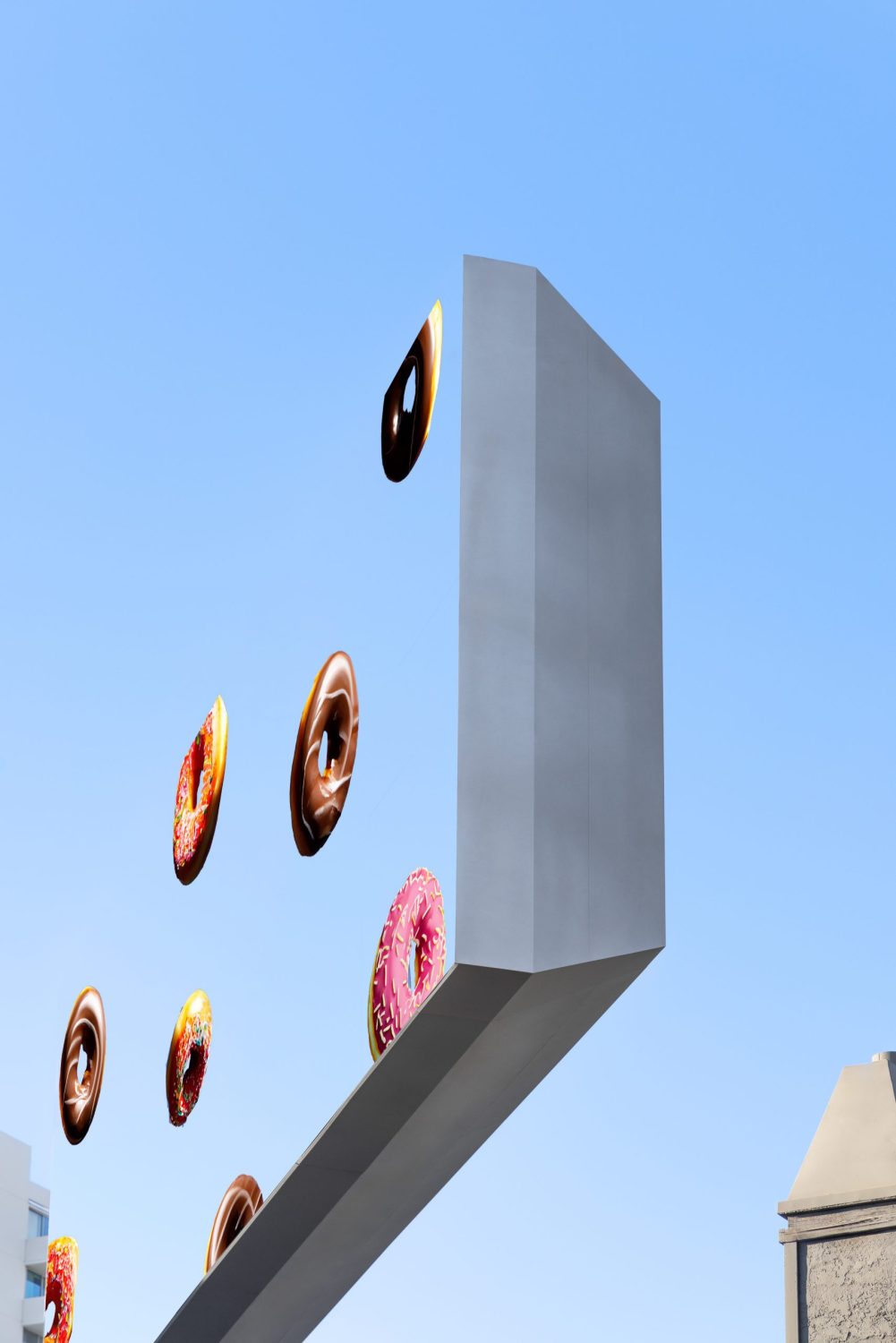
A dated steel structure previously disrupted the building’s appearance. Therefore, the new armature responds directly to its Streamline Moderne design.
The structure also draws inspiration from the large tree canopies around the site. Consequently, its curved form offers a fluid interpretation of the surrounding landscape.
A New Landmark for the Sunset Strip
The resulting “Streamlined Arbor” feels both restrained and expressive. Moreover, it combines natural form with contemporary technology.
Its flowing structure pairs old and new without imitating the historic building. In turn, the billboard creates a distinctive moment at the western edge of the Sunset Strip.
The display also provides a platform for West Hollywood’s creative community. Through partnerships with programs such as MIMA, local digital artists can present their work publicly.
Ultimately, Streamlined Arbor honors the city’s identity as the “Creative City.” It also extends Sunset Boulevard’s long tradition of experimental signage.