Cayton Children’s Museum

Location: Santa Monica, California Size: +20,000 SF Status: Built Program: Museum, Office, Retail Client: Sharewell
chevron_leftAn Armadillo, Porcupine and Onion Walk into a Museum
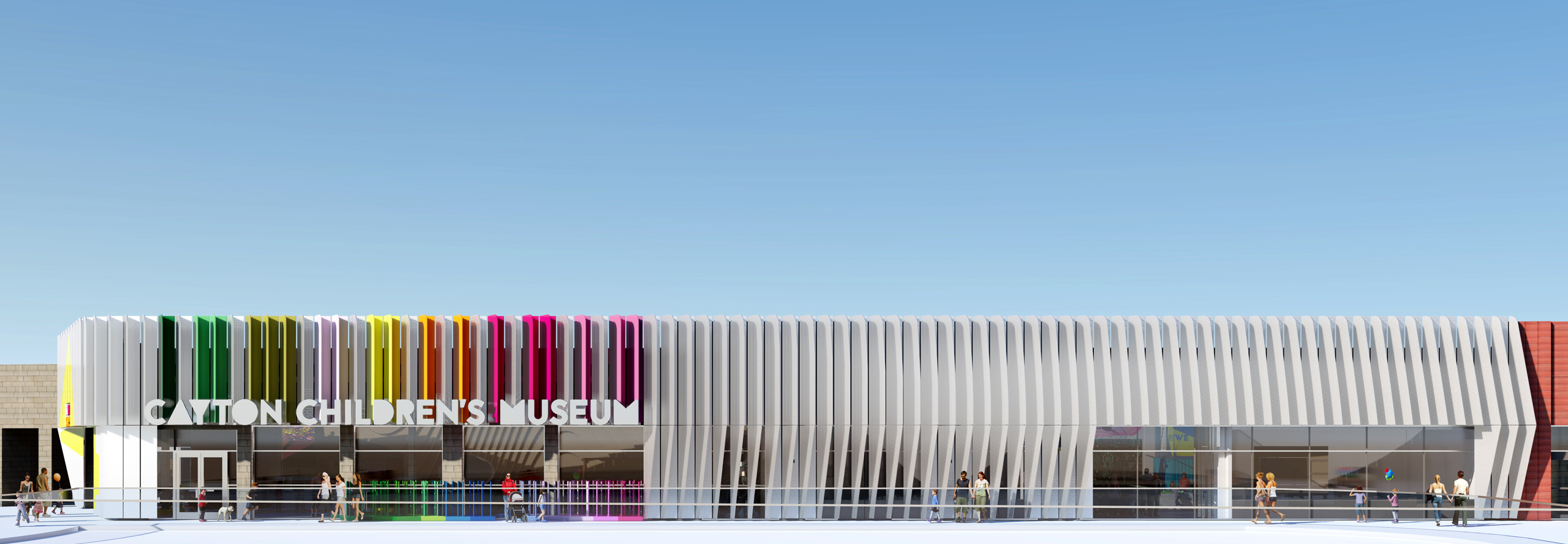
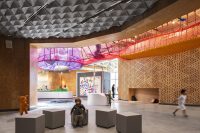
Cayton Children’s Museum brings play, learning, and community engagement indoors. The museum occupies more than 20,000 square feet near the Santa Monica Pier.
OFFICEUNTITLED transformed a former artisanal food hall inside Santa Monica Place. Frank Gehry originally designed the larger retail center. Therefore, the project gives an existing commercial space a new civic purpose.
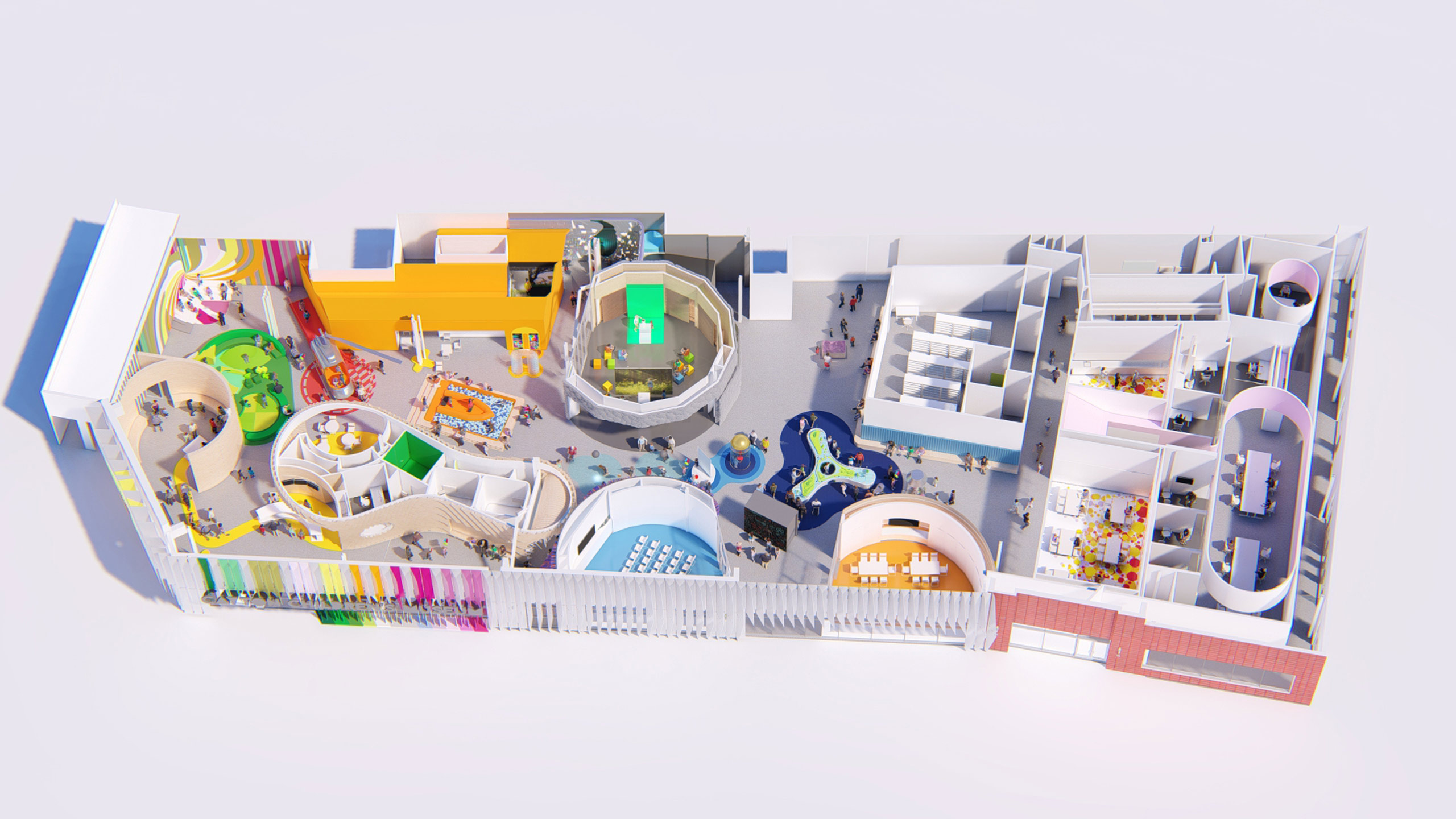
The design creates a safe and inclusive environment for discovery. Instead of following one fixed route, visitors choose their own journey. As a result, every child can create a personal “Path of Awesome.”
Creating a Path of Awesome
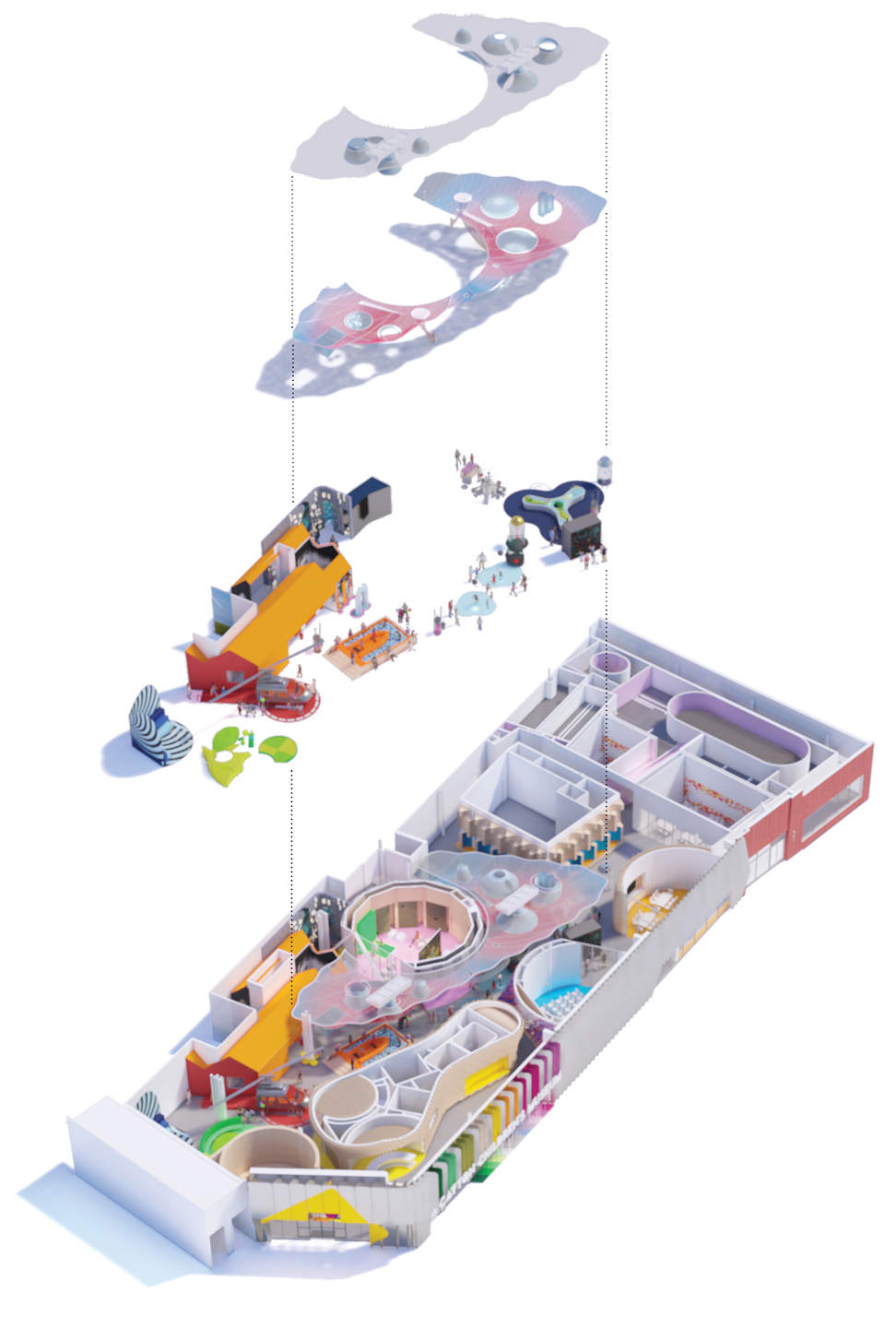
Five Exhibit Neighborhoods
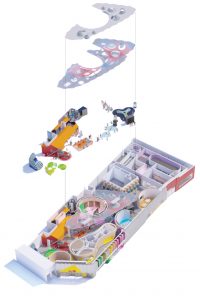
A network of tactile objects organizes more than 30 exhibits into five neighborhoods. However, the objects never reveal the entire museum at once. This approach encourages children to explore at their own pace.
The Launch Your neighborhood helps children ages zero to two develop coordination and confidence. Meanwhile, Let’s Help explores first responders, veterinarians, and the farm-to-meal process.
Together We encourages collaboration and group interaction. In addition, Reach For challenges children to test their abilities inside the Cloud Climber. Finally, Reflect On creates space for contemplation, nature, and emotional connection.
Together, the five neighborhoods support different forms of learning. They also give children opportunities to move, collaborate, imagine, and reflect.
Turning Architecture Into Play
Unexpected Objects as Waypoints
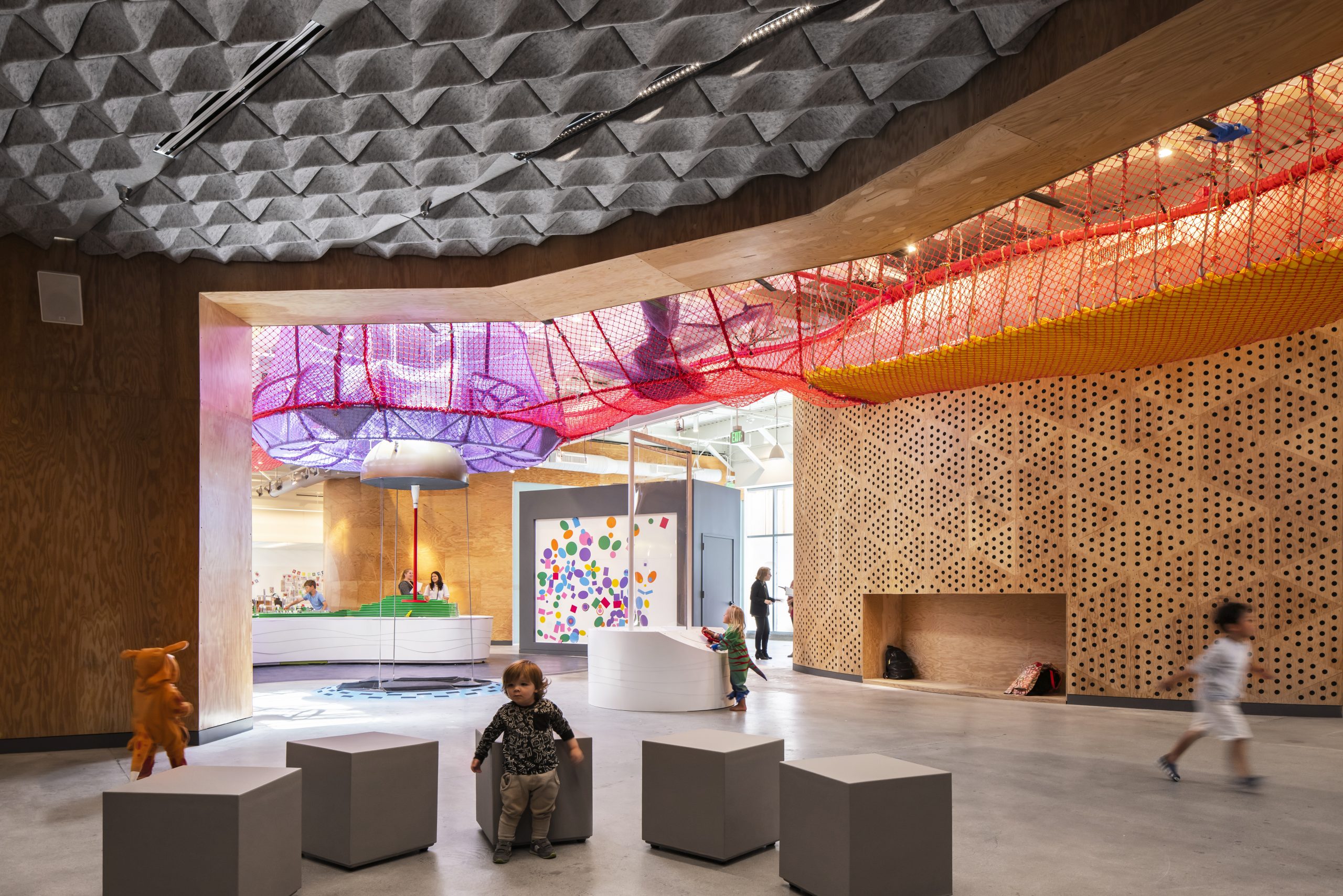
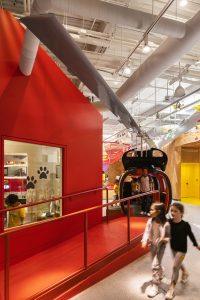
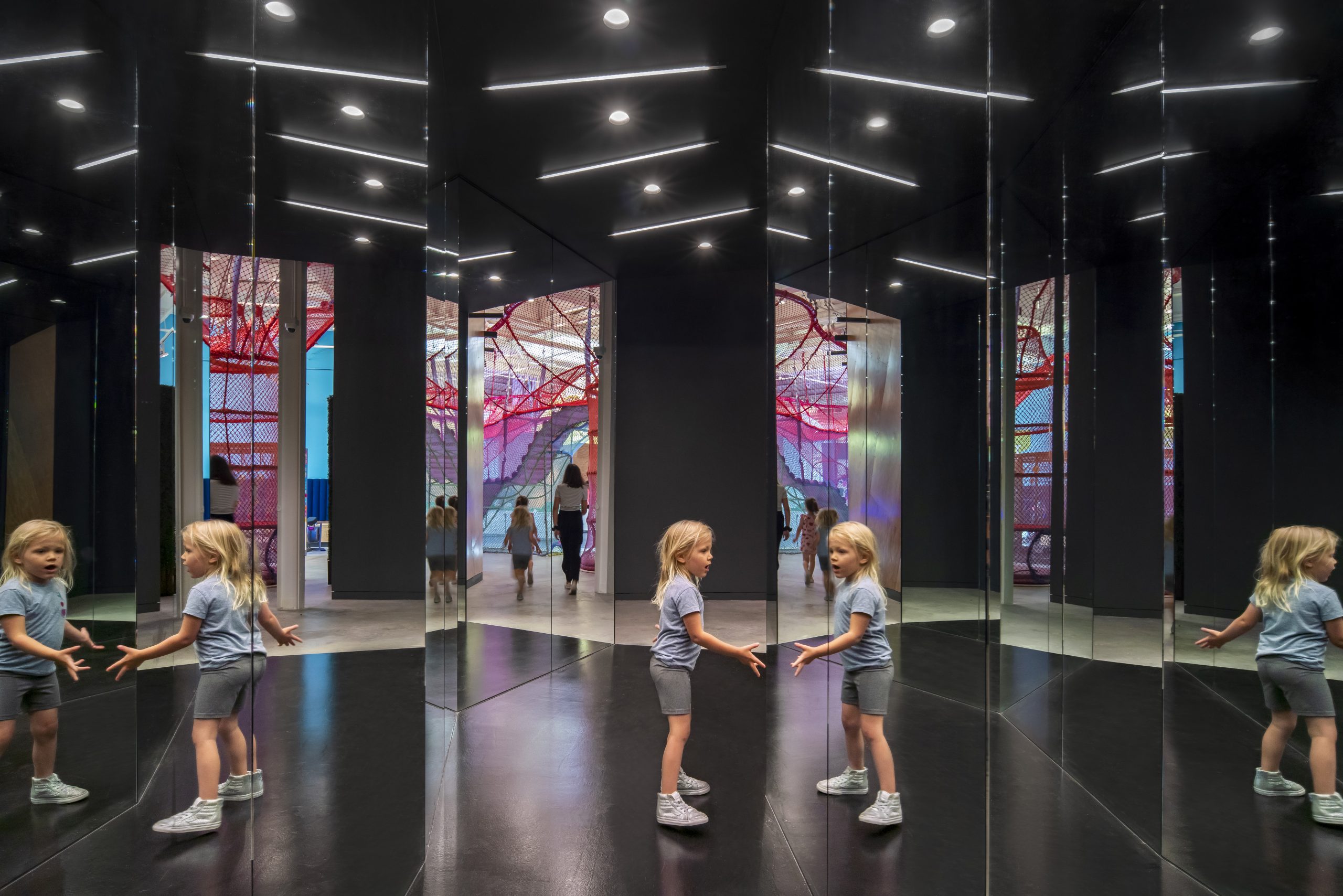
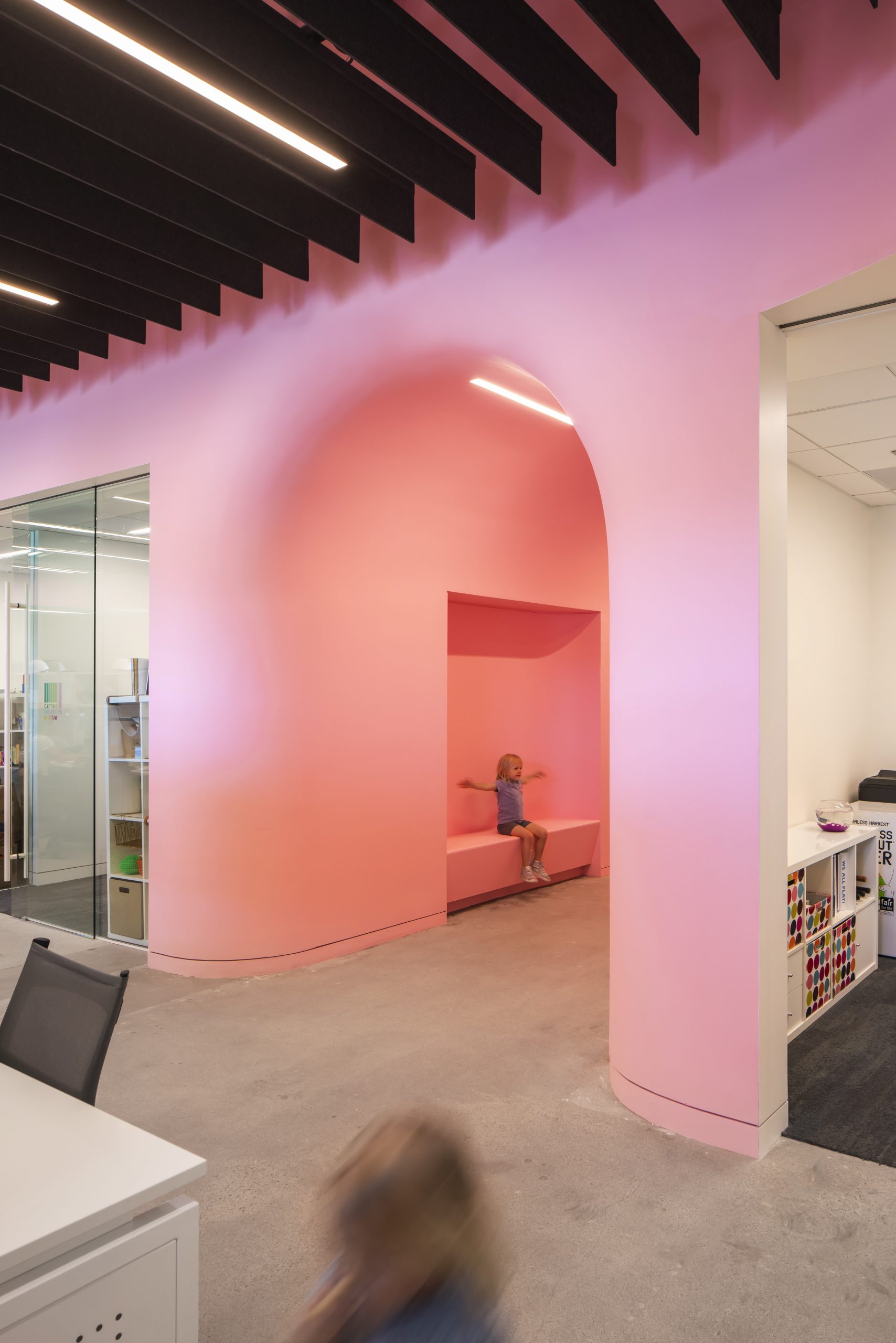
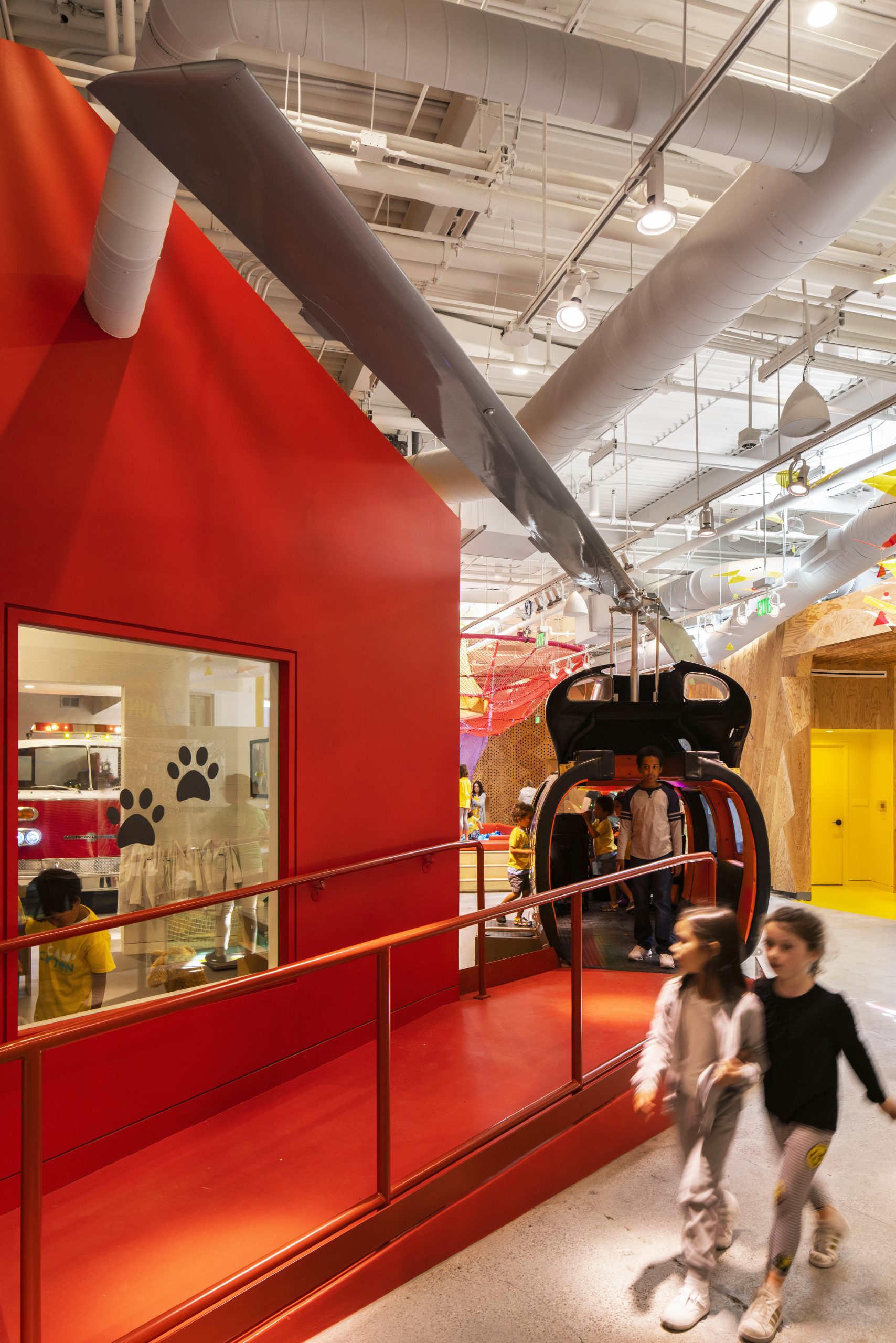
Large architectural objects guide visitors through the open museum. The team nicknamed them the Armadillo, Porcupine, Onion, Egg, Houses, and Drum.
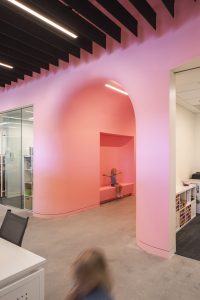
Each object shapes an exhibit neighborhood. At the same time, the objects contain essential museum programs. These functions include ticketing, security, classrooms, a flexible theater, and the MUSE retail frontage.
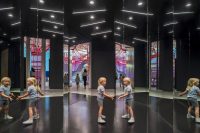
Moreover, each exterior offers a different tactile or interactive experience. Children can touch, enter, move around, and discover the objects. Consequently, the architecture becomes part of the learning experience.
The playful forms also help families navigate the open floor plan. Instead of relying only on signs, visitors can identify each area through shape, color, and texture.
Learning Through Movement
Architecture and Exhibits Working Together
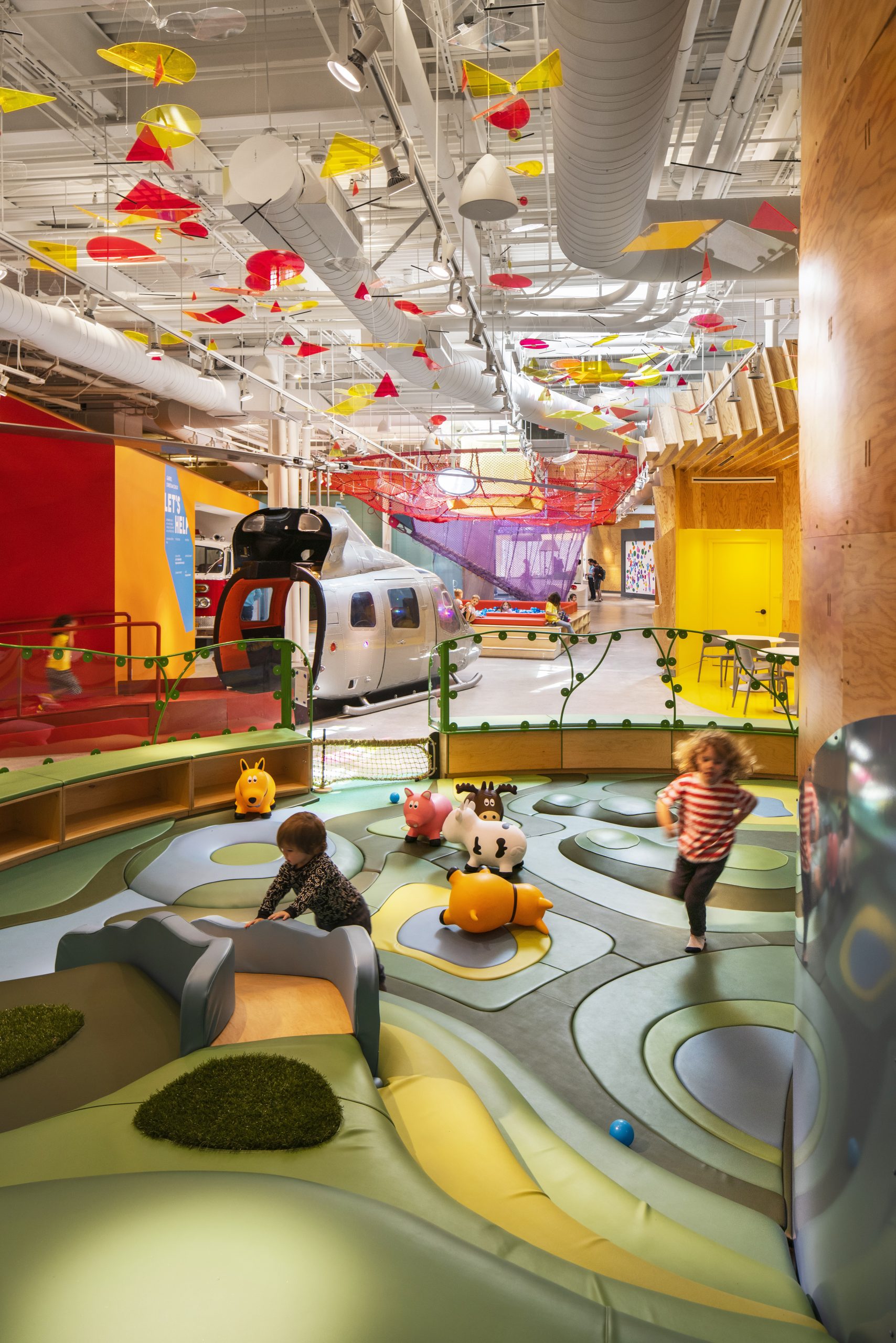
The objects and exhibits encourage activity throughout the playscape. Furthermore, their placement blurs the boundary between architecture and exhibition design.
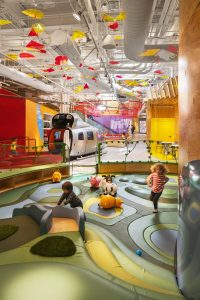
Children move between raised landscapes, ramps, rooms, and interactive installations. Meanwhile, adults can maintain visual connections across the open interior. This balance supports both independent exploration and family interaction.
Bright colors distinguish different activities and destinations. Likewise, changes in scale create spaces for younger and older children. The museum therefore supports many abilities, interests, and styles of play.
The Cloud Climber
Playing Above the Museum
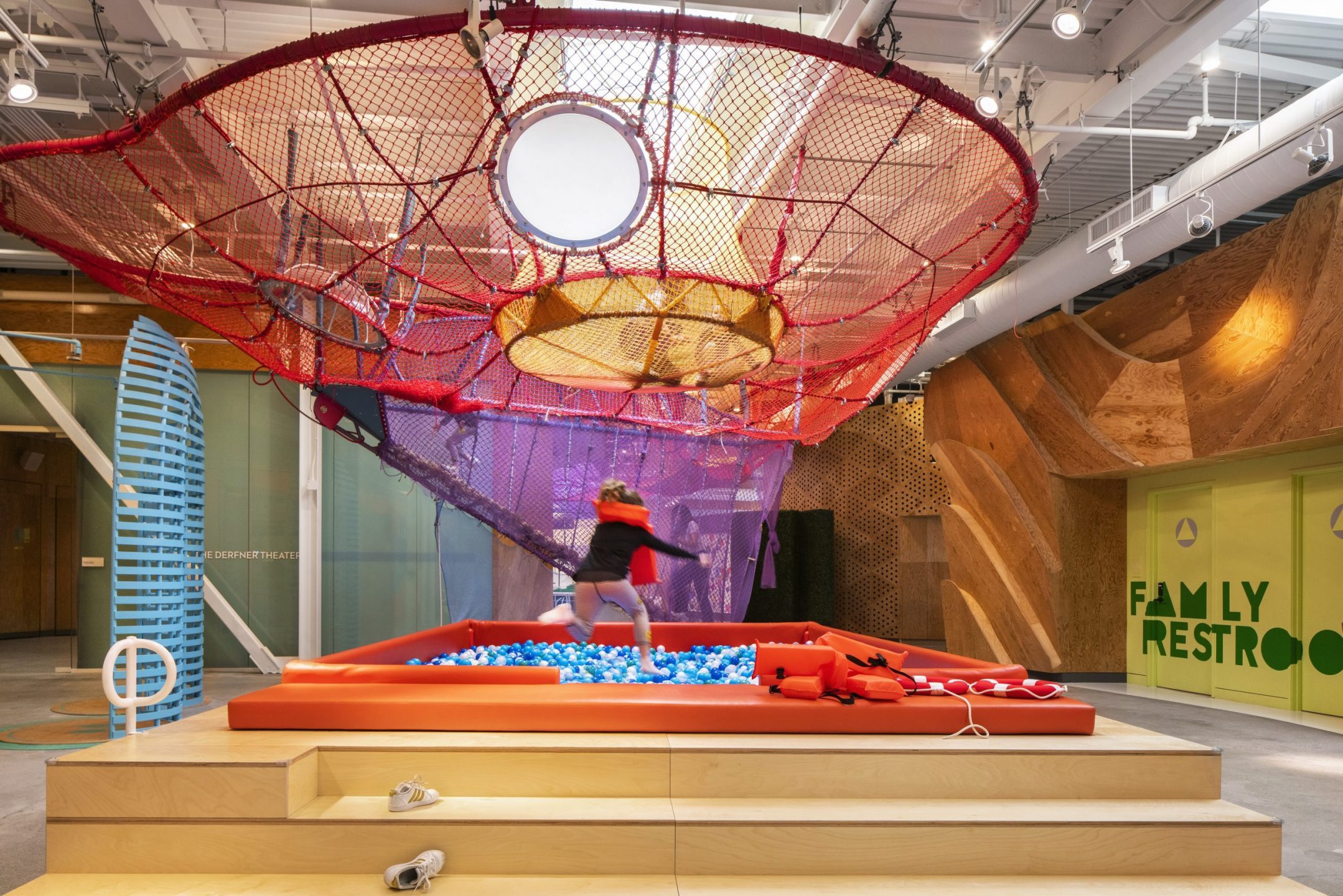
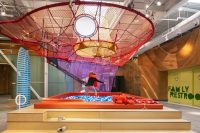
The Cloud Climber forms the museum’s largest interactive installation. Navy and fuchsia nets extend through the high-bay space. Overall, the structure covers more than 20 percent of the museum’s footprint.
Children can move laterally above several exhibit neighborhoods. In addition, the climber contains multiple destinations within its suspended pathways. Circular portals provide unexpected views of the activities below.
The Cloud Climber combines architecture, movement, and play at a dramatic scale. As a result, it creates a memorable landmark within the museum.
Cayton Children’s Museum celebrates the energy and imagination of children. Ultimately, the design turns everyday movement into an opportunity for discovery.
The museum invites visitors to choose their own routes and experiences. Moreover, its exhibits encourage curiosity, confidence, empathy, and collaboration. The result offers exploration and adventure to visitors of every age.